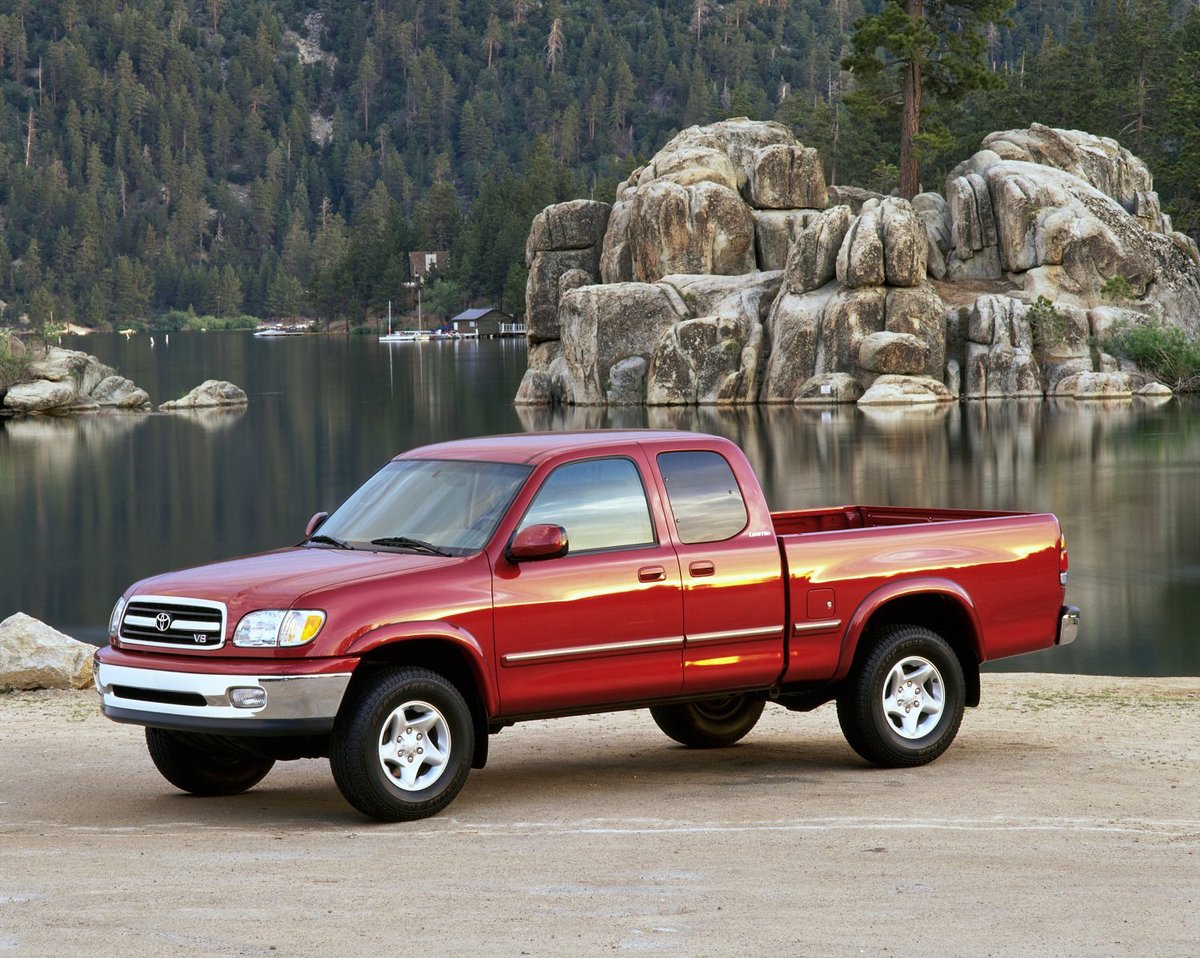
For a quarter-century, the Toyota Tundra has carved out a unique and powerful legacy in the fiercely competitive North American truck market. Born in May 1999 as a 2000 model year vehicle, it wasn't just another pickup; it was the first full-size truck from a Japanese manufacturer built right here in North America. From its pioneering debut to its current state-of-the-art hybrid powerhouse, the Tundra has consistently pushed boundaries, adapted to evolving demands, and earned a reputation for rugged capability and unwavering reliability.
This flagship hub is your ultimate guide to understanding the entire lineage of the Toyota Tundra. We'll journey through its three distinct generations, uncovering the innovations, design philosophies, and engineering prowess that have made it a beloved choice for countless drivers, workers, and adventurers. Get ready to explore how this iconic truck redefined expectations for power, comfort, and durability over 25 remarkable years.
The Genesis: Establishing Toyota's Full-Size Presence (2000-2006)
The original Toyota Tundra, internally designated XK30/XK40, burst onto the scene in May 1999, immediately signaling Toyota's serious intent in the full-size pickup segment. Sharing robust underpinnings with the Toyota Sequoia SUV, this first generation proved that a Japanese manufacturer could build a truck with serious muscle. It offered drivers a choice between a dependable 3.4L V6 and, significantly, Toyota's very first pickup V8, the 4.7L "i-Force" engine, delivering impressive power for its time.
Throughout its run, the First Gen Tundra saw thoughtful enhancements, including a 2003 facelift that refined its grille and introduced a Stepside bed option. By 2004, the highly practical Double Cab (crew cab) expanded its utility, appealing to families and those needing more interior space. With engine updates in 2005 boosting power and efficiency, and optional TRD superchargers available for earlier models, this Tundra was a force to be reckoned with, even earning an IIHS "Good" rating for frontal offset crash tests – a first for full-size pickups. To truly appreciate where it all began, Explore First Gen Tundra details Learn everything about this foundational truck.
The Era of Expansion: Bigger, Bolder, and More Capable (2007-2021)
The Second Generation Tundra, launched for the 2007 model year, was a monumental leap forward. It arrived larger, more aggressive in styling, and uncompromising in its capability. This was the generation where the Tundra truly squared off against its domestic rivals, introducing the mighty 5.7L 3UR-FE V8 engine, which, paired with a new 6-speed automatic, delivered a game-changing 381 hp and 401 lb-ft of torque. It shattered previous towing benchmarks, regularly exceeding 10,000 lbs, eventually reaching 10,400 lbs by 2010.
Over its impressive 15-year run, the XK50 Tundra received multiple updates and special editions that kept it fresh and competitive. Facelifts in 2010 and 2014 brought updated styling and a completely redesigned interior, dramatically improving comfort and technology. The introduction of the TRD Pro off-road package in 2015 cemented its adventurous spirit, while luxury trims like Platinum and 1794 Edition showcased its versatility. From standard safety features like VSC and traction control to the powerful bolt-on TRD supercharger option, this generation offered immense choice and utility. Ready to delve deeper into the features that defined its prime? Second Gen Tundra guide Explore your options and upgrades.
A Modern Revolution: Hybrid Power and Advanced Technology (2022-Now)
The latest chapter in the Tundra story began in 2022 with the unveiling of the Third Generation, designated XK70. This radical redesign signaled a bold new direction, built on the advanced GA-F body-on-frame platform. Most notably, it marked a departure from V8 engines, embracing twin-turbo V6 powerplants, including the groundbreaking "i-Force Max" hybrid. This hybrid system delivers a staggering 437 hp and 583 lb-ft of torque, all channeled through a refined 10-speed automatic transmission.
Beyond its innovative powertrains, the Third Gen Tundra boasts a fully-boxed frame, a sophisticated rear coil or air spring suspension for enhanced ride comfort and capability, and an impressive maximum towing capacity of 12,000 lbs. With new luxury-oriented Capstone and an enhanced TRD Pro trim, this Tundra combines brute strength with cutting-edge technology and premium comfort. If you're looking to understand the future of Toyota's full-size pickup, our Third Generation Tundra guide is your essential resource.
Unpacking the Power: Engine Performance and Towing Capacity Across Generations
The heart of any pickup lies in its powertrain, and the Tundra's evolution in this area is a testament to Toyota's commitment to continuous improvement. From the pioneering 4.7L i-Force V8 of the first generation to the dominant 5.7L V8 of the second, and now the innovative twin-turbo V6 and i-Force Max hybrid of the third, each generation has pushed the boundaries of power, efficiency, and hauling capability. Towing capacities have consistently climbed, reflecting the Tundra's growing ambition and engineering prowess. Understanding how these mechanical marvels have changed over time helps frame the Tundra's enduring appeal. To fully grasp the mechanical advancements that have shaped this powerhouse, Explore Tundras evolution and power in detail.
Form and Function: Design Evolution and Interior Features
Beyond the mechanicals, the Tundra's design and interior appointments have undergone significant transformations, mirroring broader industry trends and driver expectations. The first generation offered a practical, no-nonsense cabin, evolving into the second generation's more aggressive exterior styling and its completely redesigned, more comfortable interior post-2014 facelift. The third generation now sets a new standard with a thoroughly modern, technologically advanced, and luxurious cabin experience, perfectly blending rugged utility with upscale amenities. From utilitarian beginnings to sophisticated command centers, each Tundra interior reflects its era's demands for connectivity, comfort, and convenience. To fully appreciate how the Tundra has transformed visually and ergonomically through the years, Dive into Tundra design and interiors and see how it has adapted to driver needs.
A Legacy of Durability and Impact
Beyond its specifications, the Tundra has built a formidable reputation for unwavering durability. Remember the 2007 Tundra that famously clocked over 1,000,000 miles? Toyota even acquired that truck to study its longevity, integrating lessons learned into the third generation's development. This commitment to reliability has translated into consistently high predicted reliability ratings from Consumer Reports, even amidst various recalls which Toyota has addressed head-on.
The Tundra's impact extends beyond individual owners. It has excelled on the track, joining the NASCAR Craftsman Truck Series in 2004 and clinching multiple championships. And who could forget the iconic image of an unmodified Tundra Crew Max pulling the 292,000-pound Space Shuttle Endeavour across a bridge in Los Angeles? These moments aren't just marketing stunts; they're powerful demonstrations of the Tundra's inherent strength and engineering integrity.
The Tundra's Unstoppable Journey
From its groundbreaking arrival as the first full-size Japanese truck built in North America to its current status as a cutting-edge hybrid hauler, the Toyota Tundra has defined a quarter-century of robust truck development. Each generation tells a story of ambition, adaptation, and an unwavering commitment to the drivers who rely on it. As it continues its journey, the Tundra stands as a testament to Toyota's enduring vision for a pickup that's as capable as it is reliable, ready to tackle the challenges of today and tomorrow.