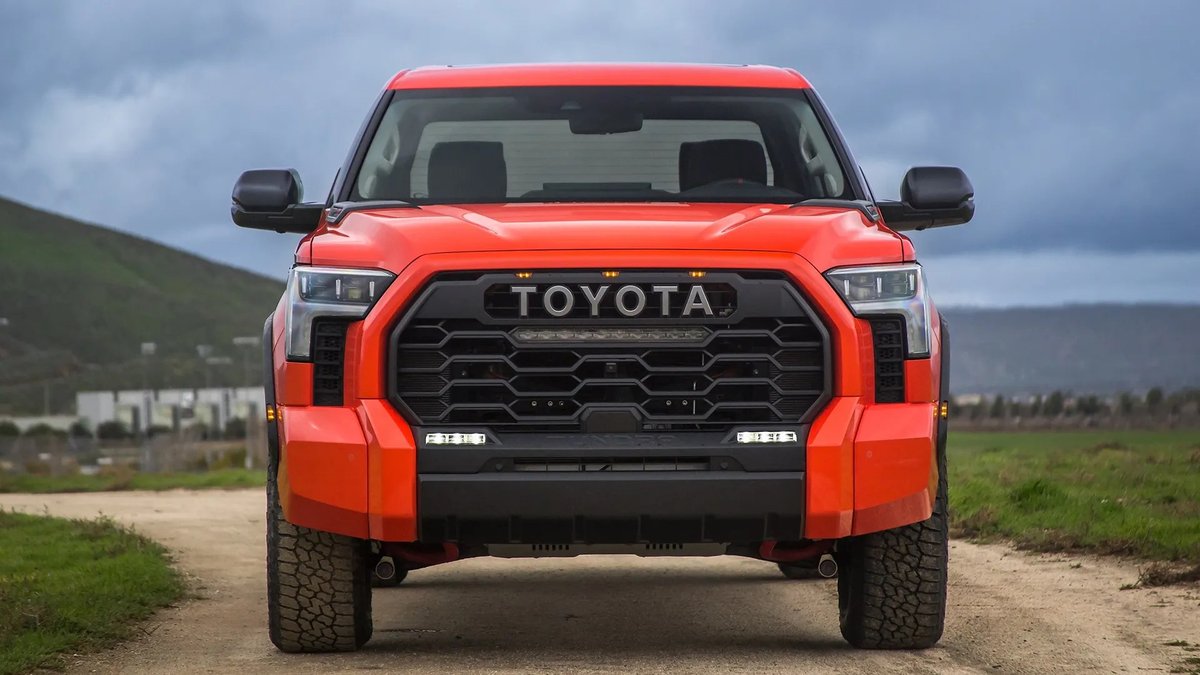
The Toyota Tundra isn't just a truck; it's a testament to raw power, enduring reliability, and an evolving commitment to tackle the toughest jobs. Since its debut as a full-size pickup in 2000, the Tundra has consistently adapted, refined its engineering, and pushed the boundaries of capability. If you're looking to understand how Toyota Tundra Generations: Engine, Performance, and Towing Capacity have evolved, you've come to the right place. We'll explore the heart of each generation, what makes them tick, and how their pulling power stacks up across the years, ensuring you can hitch up with confidence.
At a Glance: Tundra's Towing Journey
- First Generation (2000-2006): Introduced with V6 and V8 engines, maxing out at 7,200 lbs towing. A solid entry into the full-size market.
- Second Generation (2007-2021): A significant leap forward, particularly with the powerful 5.7L i-Force V8, pushing towing capacity to an impressive 10,800 lbs.
- Third Generation (2022-Present): Redesigned from the ground up, featuring twin-turbo V6 and hybrid powertrains, achieving a class-leading maximum towing capacity of 12,000 lbs.
- SAE J2807 Standard: Every Tundra's towing capacity is rated using this rigorous industry standard, guaranteeing realistic and comparable figures.
- Key Factors: Engine, transmission, drivetrain (2WD vs. 4WD), bed length, axle ratio, and even payload all play a role in your Tundra's ultimate pulling power.
- Braked vs. Unbraked: Always use a trailer with brakes for loads over 1,500 lbs.
The Tundra Legacy: A Full-Size Player Emerges
When the Toyota Tundra rolled onto the scene in 2000, it marked Toyota's serious foray into the highly competitive full-size truck segment. It wasn't just another pickup; it was a promise of Toyota's renowned durability and quality, now in a larger, more capable package. From its inception, the Tundra has been designed to haul, tow, and perform, all while upholding the brand's reputation for reliability. Crucially, every Tundra's towing capacity has been rated according to the SAE J2807 standard, an independent set of guidelines that ensures transparent and consistent towing figures across manufacturers. This means when Toyota says your Tundra can tow 10,000 pounds, you can trust that it genuinely can, under real-world conditions.
First Generation (2000-2006): Laying the Foundation
The inaugural Tundra, often referred to as the "half-ton" due to its capabilities, set a robust benchmark for Toyota in the truck market. It was a comfortable, reliable workhorse that quickly gained a loyal following.
Engine Options & Performance
- 3.4L V6: This initial powerhouse produced a respectable 190 horsepower and 220 lb-ft of torque. It was a solid choice for lighter duties and everyday driving.
- 4.7L i-Force V8: For those needing more grunt, the 4.7L i-Force V8 delivered 245 horsepower and 315 lb-ft of torque. This engine truly embodied the "i-Force" moniker, providing a significant boost in performance.
Transmission
The first-gen Tundra primarily came with a 4-speed automatic transmission across the lineup, though a 5-speed manual was also available with the V6 for a brief period. While reliable, the 4-speed automatic was a limiting factor in maximizing towing potential compared to later, more sophisticated transmissions.
Towing Capacity
For its time, the first-generation Tundra offered competitive towing figures, generally ranging between 7,100 to 7,200 pounds. This capacity, while respectable, reflected the truck's early design and transmission limitations. It was well-suited for smaller boats, utility trailers, and pop-up campers.
Payload Capacity
Owners of the first-gen Tundra could expect a payload capacity ranging from 1,500 to 1,800 pounds. This meant you could comfortably haul a decent amount of gear in the bed without compromising safety.
Conversational tie-in: While the original Tundra was a strong contender, its focus was on establishing a reliable presence. The real towing leaps were yet to come.
Second Generation (2007-2021): The Rise of the i-Force Powerhouse
The second-generation Tundra, launched in 2007, was a game-changer. It grew significantly in size and capability, directly targeting the domestic full-size truck titans. This generation saw a dramatic increase in towing and overall performance, thanks to a wider range of potent engines and more advanced transmissions.
Engine Options & Performance
- 4.0L V6: Initially offered, this V6 delivered 236 horsepower and 266 lb-ft of torque. It was a more fuel-efficient option for lighter work, offering towing around 7,100-8,000 pounds.
- 4.7L V8 (2007-2009): An updated version of the previous V8, now boasting 271 horsepower and 313 lb-ft of torque, capable of towing approximately 8,300 pounds.
- 5.7L i-Force V8: This was the undisputed king of the second generation. Producing a robust 381 horsepower and 401 lb-ft of torque, it transformed the Tundra into a serious heavy-hauler. This engine consistently enabled towing capacities of 10,200 to 10,800 pounds. For many Tundra enthusiasts, this V8 remains the benchmark for raw power and reliability.
- 4.6L V8 (2010 onwards): Introduced as a more efficient V8 option, it delivered 310 horsepower and 327 lb-ft of torque. Towing capacity with this engine generally ranged from 6,400 to 8,800 pounds, making it a versatile choice for a wide array of tasks.
Transmission
The second generation saw the introduction of more gears. Early models retained a 5-speed automatic, but the mighty 5.7L V8 soon received a more advanced 6-speed automatic transmission. This extra gear ratio was critical, allowing the engine to operate in its power band more efficiently, directly contributing to the significant jump in towing capacity up to 10,800 pounds.
Towing Capacity
This generation truly elevated the Tundra's towing prowess. Maximum capacities fluctuated slightly by year and configuration, but the 5.7L V8 consistently led the pack:
- 2009-2007: 10,800 pounds
- 2010: 10,500 pounds
- 2013-2011: 10,400 pounds
- 2017-2014: 10,500 pounds
- 2021-2018: 10,200 pounds
Payload Capacity
The second-generation Tundra saw varied payload capacities depending on the specific year and configuration:
- 2007-2009: 1,730–2,065 pounds
- 2010–2017: 1,600–2,090 pounds
- 2018–2021: 1,440–1,730 pounds
Towing Technology Introduced
Beyond sheer power, the second-gen Tundra started integrating smart towing technologies that made hauling safer and easier:
- Tow/Haul Mode: Optimizes transmission shift points for towing heavy loads, reducing gear hunting.
- Integrated Trailer Brake Controller (ITBC): Allows direct control of trailer brakes from the cabin, essential for heavy trailers.
- Trailer Sway Control (TSC): Automatically applies brakes and reduces engine power to mitigate dangerous trailer sway.
- Heavy-Duty Hitch Receiver: Integrated directly into the frame for maximum strength.
- Backup Camera: Standard on later models, simplifying trailer hook-ups.
Conversational tie-in: The second-gen Tundra solidified its reputation as a serious contender, proving that Toyota could build a full-size truck with American-sized capabilities. For many, a used 5.7L V8 Tundra still represents an excellent value for significant towing power.
Third Generation (2022-Present): Turbocharged, Hybrid, and Towing Pinnacle
The third-generation Tundra, launched for the 2022 model year, represents a radical departure and a leap forward in technology, efficiency, and capability. Built on an entirely new platform, it brought modern powertrains and sophisticated towing assistance features to the forefront.
Engine Options & Performance
Gone are the natural aspirated V8s. The new Tundra embraces forced induction and hybridization:
- 3.5L i-Force Twin-Turbo V6: This standard engine is no slouch, delivering an impressive 389 horsepower and 479 lb-ft of torque. It's a remarkably capable powertrain, providing immediate and strong acceleration.
- 3.5L i-Force MAX Hybrid V6: The flagship engine, combining the twin-turbo V6 with an electric motor for a stunning 437 horsepower and 583 lb-ft of torque. This hybrid system delivers incredible low-end torque, ideal for pulling massive loads from a standstill. This is the engine that unlocks the Tundra's maximum towing potential.
Transmission
Both new engines are paired with a smooth and responsive 10-speed automatic transmission. This advanced transmission is a crucial factor in the Tundra's enhanced towing capacity. More gears mean finer control over engine RPMs, allowing the truck to always find the optimal gear for power delivery or fuel efficiency, whether you're climbing a steep grade or cruising on the highway.
Towing Capacity
The third-generation Tundra takes towing to new heights, establishing itself among the segment leaders:
- 3.5L i-Force Twin-Turbo V6: Capable of towing up to 11,450 pounds.
- 3.5L i-Force MAX Hybrid V6: Reaches the Tundra's current maximum towing capacity of 12,000 pounds, especially in properly equipped TRD Pro and Capstone models.
- 2025-2022: 12,000 pounds maximum.
Payload Capacity
Thanks to its new boxed frame, multi-link rear suspension, and lighter materials, the third-generation Tundra also sees an improvement in payload capacity:
- 1,575 to 1,940 pounds.
- It's worth noting that while the hybrid powertrain offers superior towing, the additional weight of the hybrid components can slightly reduce the maximum payload capacity in some configurations compared to non-hybrid models.
Advanced Towing Technology
The latest Tundra is packed with cutting-edge tech designed to make towing less stressful and more secure:
- Towing Technology Package: Includes a 360-degree camera system, Trailer Backup Guidance (helps steer the trailer in reverse), and Straight Path Assist (automatically keeps the trailer straight while backing up).
- Adaptive Suspension and Air Suspension: Available options that can automatically level the truck, ensuring a stable and comfortable ride even with heavy tongue weights.
- Multi-link Rear Suspension: A departure from leaf springs, this new setup improves ride comfort, handling, and contributes to better towing stability.
- Integrated Trailer Brake Control (more advanced): Offers smoother, more precise braking for various trailer types.
- Smart Trailer Integration: Future-proof technology designed to integrate with smart trailer systems.
Conversational tie-in: The third-gen Tundra is a testament to modern engineering, blending power, efficiency, and smart technology to deliver an unparalleled towing experience.
Decoding Towing Capacity: More Than Just an Engine
While the engine is undeniably the heart of your Tundra's towing prowess, several other factors combine to determine its true capability. Understanding these nuances is crucial for safe and efficient hauling.
Braked vs. Unbraked Towing
This is a critical distinction for safety. Your Tundra has two towing capacities:
- Braked Towing: This is the much higher figure (7,200 lbs – 12,000 lbs) and applies when your trailer is equipped with its own braking system, properly connected to your truck. Trailer brakes allow the trailer to slow down independently, preventing it from pushing your Tundra and significantly reducing stopping distances.
- Unbraked Towing: This is the limit for trailers without their own brakes. For all Tundra generations, the unbraked towing capacity is a strict 1,500 pounds. Exceeding this limit without trailer brakes is extremely dangerous and illegal in many places.
Key Factors That Influence Your Tundra's Tow Rating
Think of these elements as a team, all working together (or against each other) to define your Tundra's limits.
- Engine Options: As we've seen, this is paramount. More horsepower and, critically, more torque directly translate to greater pulling power. The right engine ensures you can accelerate and maintain speed even with a heavy load.
- Transmission Choices: A modern transmission with more gears (like the 10-speed in the third-gen) allows the engine to stay within its optimal power band, providing smoother acceleration and more efficient power transfer. Older 4-speed automatics inherently limit towing capacity.
- Bed Length & Configuration: Surprisingly, a shorter bed can sometimes marginally increase towing capacity (around 500 pounds in some cases). This is often due to wheelbase and weight distribution dynamics.
- 2WD vs. 4WD: Rear-wheel-drive (2WD) models typically offer a slightly higher maximum towing capacity than their four-wheel-drive (4WD) counterparts. This is because the 4WD system adds weight to the truck, which counts against its Gross Combined Weight Rating (GCWR), thus reducing the available towing capacity.
- Axle Ratios: This is an often-overlooked factor. A "higher" axle ratio (e.g., 4.30:1 vs. 3.91:1) means the engine will spin more revolutions for each wheel revolution. This provides more mechanical advantage for pulling heavy loads, even if it slightly reduces fuel economy.
- Payload & Passengers: Every pound of weight in your truck – passengers, cargo in the bed, and even the tongue weight of your trailer – directly reduces the available towing capacity. Your vehicle has a Gross Combined Weight Rating (GCWR) which is the maximum total weight of the truck, trailer, and all their contents combined. Understanding your truck's payload capacity is vital because overloading your truck can dangerously cut into your ability to tow safely.
Essential Towing Gear and Smart Tech
Your Tundra is designed for towing, but some key accessories and integrated technologies make the job safer and easier.
Standard Towing Package Components
Most Tundra trims come with a standard towing package that includes crucial hardware:
- Class IV Tow Hitch Receiver: Integrated directly into the TripleTech frame, providing a robust connection point for your trailer.
- 4- and 7-Pin Connectors with Converter: Essential for connecting your trailer's lights and (for the 7-pin) its electric brakes and auxiliary power.
- Integrated Trailer-Sway Control (TSC): Helps maintain control if your trailer starts to sway by automatically applying individual wheel brakes and adjusting engine power.
- Integrated Trailer Brake Controller (ITBC): Allows you to control your trailer's electric brakes from the dashboard. This is a non-negotiable for heavy trailers.
Optional Towing Accessories
While the Tundra often has the basics covered, you might need a few extras for specific towing needs:
- Tundra Tow Mirrors: Larger mirrors extend your field of view, crucial for seeing around wider trailers. These are typically sold separately.
- Ball Mount: The part that connects to your hitch receiver and holds the trailer ball. Ensure you use the correct rise/drop to keep your trailer level.
- Trailer Ball: Match the size to your trailer's coupler (e.g., 2-inch or 2 5/16-inch).
Hitch Installation & Types
Your Tundra uses either a Class 3 or Class 4 hitch, depending on the model and year. These are heavy-duty, frame-mounted hitches designed for substantial loads.
- Professional vs. DIY: While installing a hitch receiver can be a DIY project with the right tools and instructions, professional installation (costing around $100-$200, not including hitch/wiring) ensures everything is correctly and safely mounted.
- Bumper Towing: You might see some smaller hitches mounted directly to the bumper. While permissible for very light loads, you must be extremely cautious not to exceed the bumper's weight rating. For anything significant, a frame-mounted hitch is far safer and easier to use.
- How to Check for a Tow Package: The easiest way is to look under the rear bumper for the hitch receiver itself and the electrical connectors. You can also check your vehicle's documentation or contact a Toyota dealer with your VIN.
Consider essentialtowing accessorieslike a weight distribution hitch for an even more stable and secure towing experience.
Tundra Payload: What You Can Carry in the Bed
Payload capacity refers to the maximum weight your truck can carry, including passengers, cargo in the cab, and anything in the bed. It's often confused with towing capacity, but both are critical for safe hauling.
- First Generation (2000–2006): Typically 1,500 to 1,800 pounds.
- Second Generation (2007–2021): Ranged widely from 1,440 pounds (later years) up to 2,090 pounds (earlier, lighter configurations).
- Third Generation (2022–Present): Improved to 1,575 to 1,940 pounds. The new boxed frame and suspension contribute to this increase, though the i-Force MAX hybrid's added weight can slightly reduce its maximum payload compared to non-hybrid models in some configurations.
Remember, the tongue weight of your trailer (the downward force it exerts on the hitch) counts directly against your truck's payload capacity. Don't overlook this crucial detail!
Tundra vs. The Competition: A Quick Look (2024 Models)
While the Tundra consistently delivers impressive towing capabilities, it's helpful to see how it stacks up against its domestic rivals.
- Toyota Tundra (Max 12,000 lbs): While its absolute max towing might be slightly lower than some top-tier competitors, the Tundra shines in its legendary durability, long-term reliability, and strong resale value. The i-Force MAX hybrid also offers an impressive blend of power and efficiency.
- Ford F-150 (Max 14,000 lbs): Often leads the segment in sheer maximum towing figures, offering a wide array of engine options and advanced features.
- Chevy Silverado 1500 (Max 13,300 lbs): A strong competitor with powerful engine options and comfortable ride quality.
- Ram 1500 (Max 12,750 lbs): Known for its luxurious interiors and segment-exclusive air suspension, providing excellent ride comfort.
While other trucks might boast slightly higher maximum towing numbers, the Tundra's commitment to robust engineering, long-term dependability, and now, advanced hybrid efficiency, carves out a unique and highly respected niche in the full-size truck market. For deeper insights into models, learn more about Tundra generations and their unique strengths.
Finding Your Perfect Towing Partner: Tundra Recommendations
Choosing the right Tundra depends on your specific towing needs and budget. Here are some recommendations based on common scenarios:
- For Heavy-Duty Hauling (up to 12,000 lbs): Look no further than a 2022+ Tundra, especially those equipped with the i-Force MAX Hybrid engine (TRD Pro, Capstone, or Limited Hybrid). This powertrain, combined with the 10-speed transmission and advanced towing tech, is built for the biggest jobs.
- For Budget-Friendly, Strong Towing (around 10,000 lbs): A 2014-2021 Tundra with the 5.7L i-Force V8 offers an incredible blend of proven reliability and substantial towing capacity for its price point. You get a robust engine, a 6-speed automatic, and the core towing features without the premium price tag of a brand-new model.
- For Fuel-Efficient Towing (still powerful): The 2022+ Tundra with the standard 3.5L i-Force Twin-Turbo V6 is an excellent choice. It provides impressive towing capacity (up to 11,450 lbs) with significantly better fuel economy than the old V8, or opt for the Limited Hybrid for even more efficiency without sacrificing much power.
Maximizing Towing Performance and Safety: Pro Tips
Towing isn't just about hooking up a trailer and hitting the road. To ensure a safe, stable, and stress-free journey, a few best practices and accessories are essential.
Beyond the Basics: Crucial Accessories
Even if your Tundra has a tow package, these additions can significantly enhance your towing experience:
- Weight Distribution Hitch (WDH): For heavier travel trailers, a WDH helps distribute the trailer's tongue weight more evenly across all axles of both the truck and trailer. This dramatically improves stability, reduces sag at the rear of the truck, and brings the front of the truck back down for better steering and braking.
- Trailer Brake Controller: While many Tundras come with an integrated controller, ensure yours is properly calibrated for your specific trailer. An aftermarket controller might be necessary if your Tundra lacks one or if you prefer specific features. This is vital for safe stopping.
- Towing Mirrors: Standard mirrors often don't provide adequate visibility when towing wide trailers. Extendable or clip-on towing mirrors drastically improve your rearward view, minimizing blind spots and enhancing safety during lane changes and turns.
Smart Towing Practices
These habits are essential for anyone who tows:
- Know Your Limits: Never exceed your Tundra's stated towing capacity, payload capacity, or your trailer's Gross Vehicle Weight Rating (GVWR). Overloading is dangerous and can damage your vehicle.
- Secure Your Cargo & Distribute Weight Properly: Loose items can shift, causing instability. Distribute the trailer's weight so that 10-15% of the total trailer weight is on the tongue (the part resting on your hitch). Too little tongue weight can lead to dangerous trailer sway, while too much can overload your truck's rear axle.
- Utilize Tow/Haul Mode: Activating this mode optimizes your transmission's shift points, engine braking, and throttle response for towing. It reduces gear hunting and provides more control.
- Perform Pre-Trip Checks: Before every trip, check tire pressures (truck and trailer), all fluid levels, trailer light functionality, brake connections, safety chains, and hitch connections.
- Drive Defensively: Allow more following distance, anticipate stops, brake gently, and make wider turns. Your vehicle behaves differently with a heavy load.
- Regular Maintenance: Ensure your Tundra is in top mechanical condition. Regular
maintenance is keyfor safe and efficient towing.
Common Questions About Tundra Towing
Let's clear up some frequent queries about what your Tundra can haul.
Can a Toyota Tundra pull a fifth-wheel trailer?
While a Tundra is capable of pulling lighter fifth-wheel trailers, it's generally not designed for the larger, heavier fifth-wheels that heavy-duty (2500/3500 series) trucks are built for. Always check the specific weight of the fifth-wheel and compare it against your Tundra's maximum towing and payload capacities, paying close attention to pin weight, which counts directly against payload.
What kinds of trailers is a Tundra good for pulling?
The Tundra is an excellent choice for a wide variety of trailers, including:
- Utility trailers
- Small to medium travel trailers and campers (like Airstreams or mid-size RVs)
- Boat trailers (bass boats, ski boats, smaller cruisers)
- Horse trailers (single or lighter double horse trailers)
- Car haulers (for lighter vehicles)
Where can I find the most accurate towing information for my specific Tundra model?
Always consult your vehicle's owner's manual for the most precise and up-to-date towing and payload capacities. You can also contact a Toyota dealership with your Vehicle Identification Number (VIN) for model-specific data.
Ready to Hitch Up? Your Tundra Awaits.
Whether you're looking at a tried-and-true second-generation workhorse or the cutting-edge power of the latest models, the Toyota Tundra consistently delivers on its promise of capability and reliability. Understanding how each of its generations, engines, and performance metrics contribute to its towing capacity empowers you to make an informed decision and tow with confidence. Always refer to your owner's manual for the most accurate information regarding your specific vehicle's towing limits and best practices. If you're considering a purchase, check out our comprehensive truck buying guide to help you find the perfect rig for your needs. Happy hauling!